An agent that finds healthy groceries
Concept
2026

This design was created for Google’s DeepMind Gemini Hackathon in Feb 2026.
There are many apps that deliver food straight to your door, but few that address the real issue of “Where should I get food?” This difficult question is a reality for individuals living in food deserts. Food deserts are characterized by a lack of a nearby supermarket and also by chains of fast food stores that don’t offer healthy options for local residents. Therefore, the problem is not ordering food, but rather healthy alternatives.
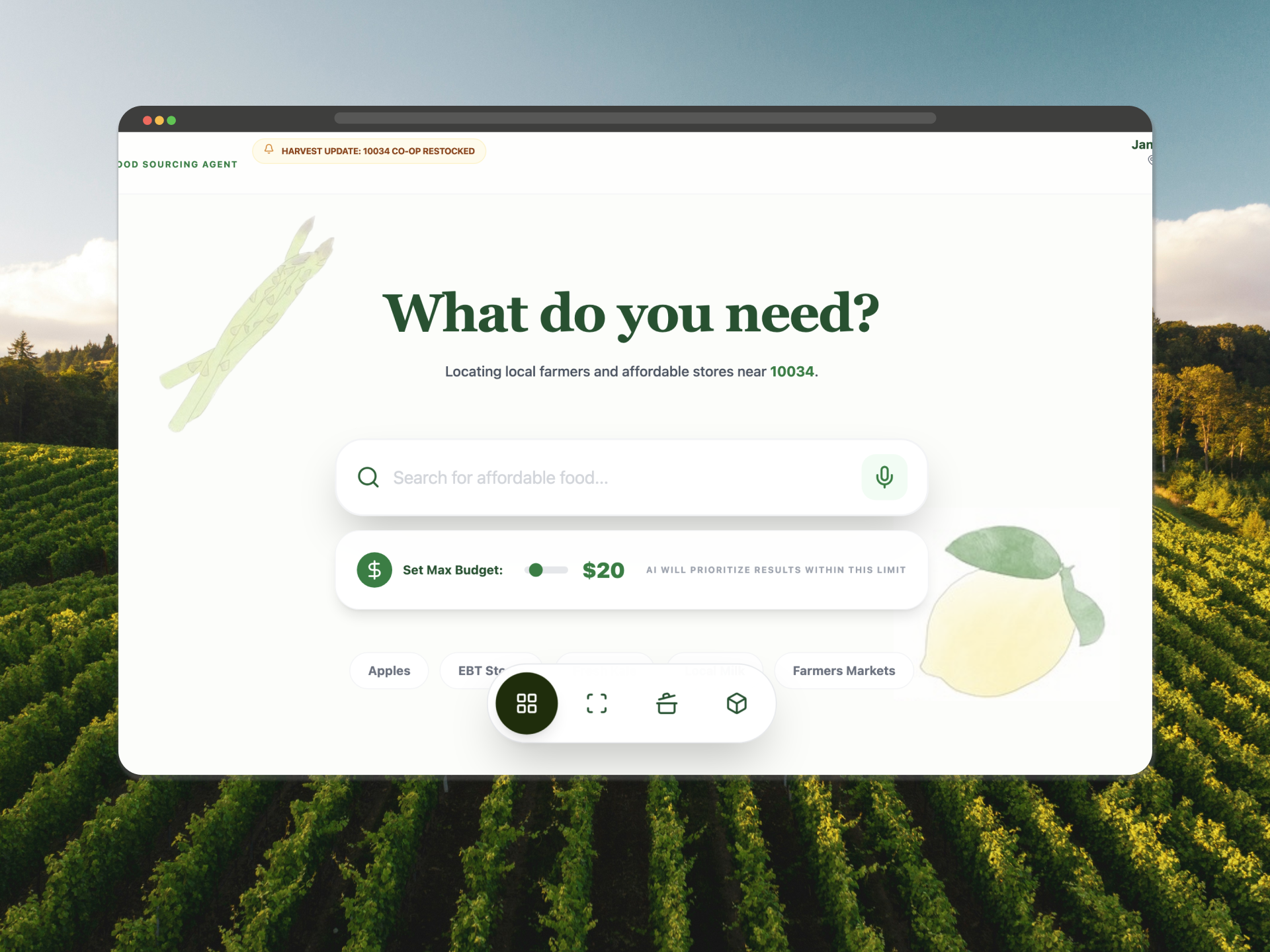
For the hackathon, I created a multimodal voice AI agent that finds different food alternatives from supermarkets and farmers’ markets for those living in food deserts. The agent takes into account the person’s location, health goals, and economic circumstances to provide them with a list of locations where they can order and receive healthy foods.
This was created for Google’s DeepMind hackathon. But, after the hackathon, I tested the app among 5 different users and noted a high user satisfaction in finding good quality grocery options.
The truth of the problem was double-sided. Low-income minorities trapped in food deserts suffer the effects of being deprived of healthy food options, while farmers suffer losses of unwanted produce. Therefore, there was an opportunity to resolve both user issues.
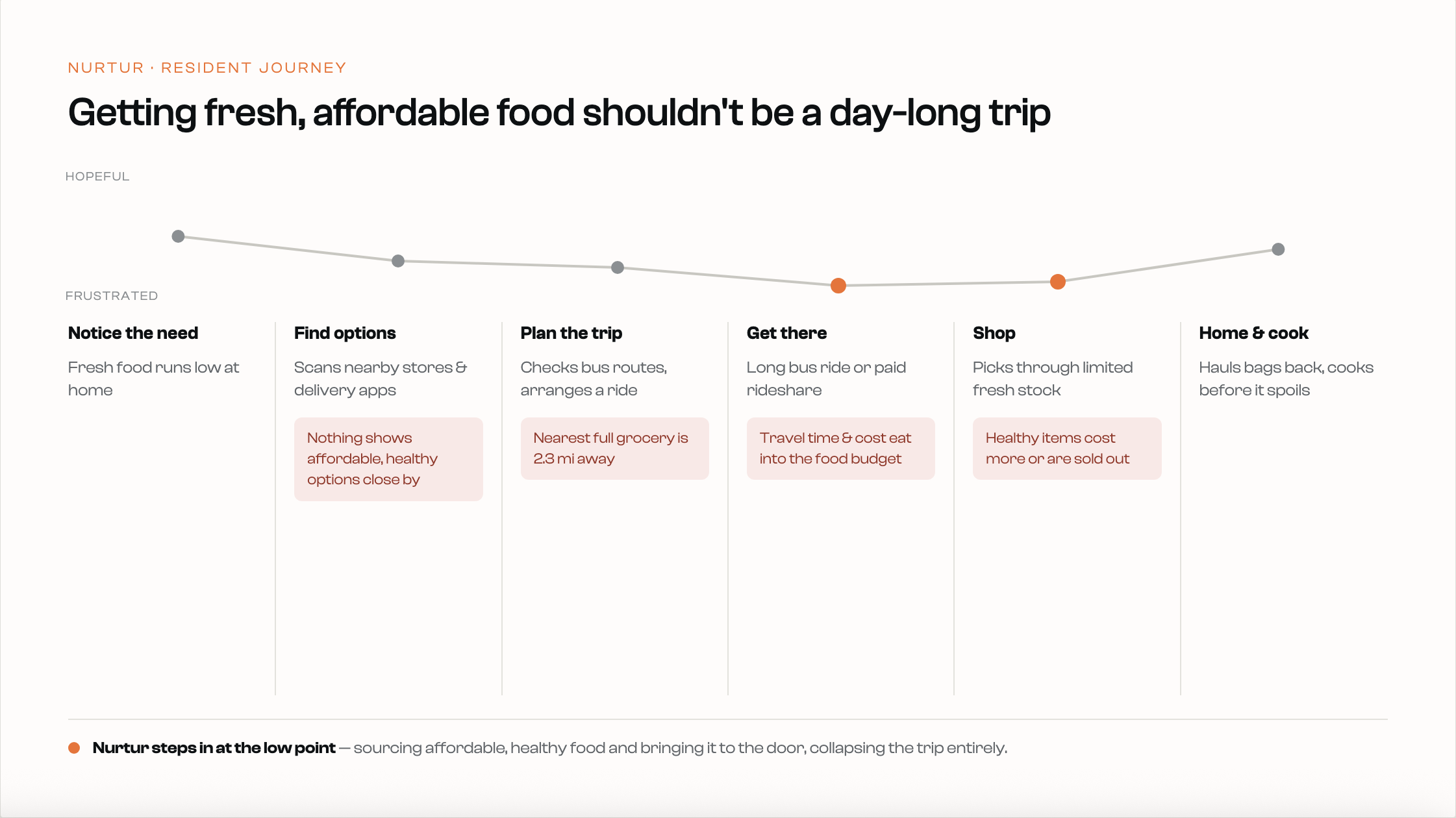
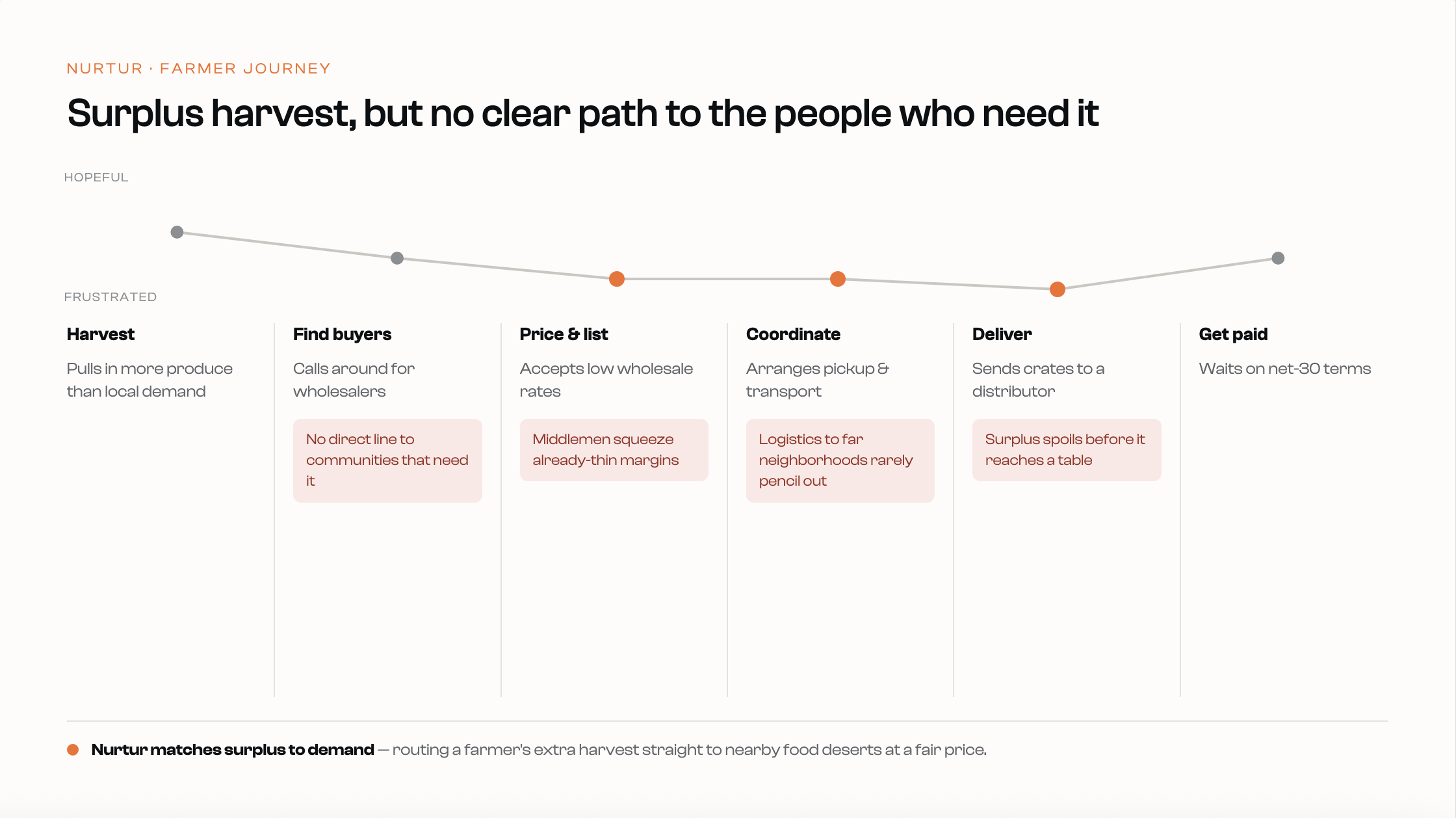
PAIN POINT: The typical journey starts on delivery, not on sourcing food
Key Insight: The app shouldn’t be just another food delivery application. There are already many apps that accept EBT/SNAP. These apps require users to already know which stores carry what they need, while farmers continue to remain invisible.
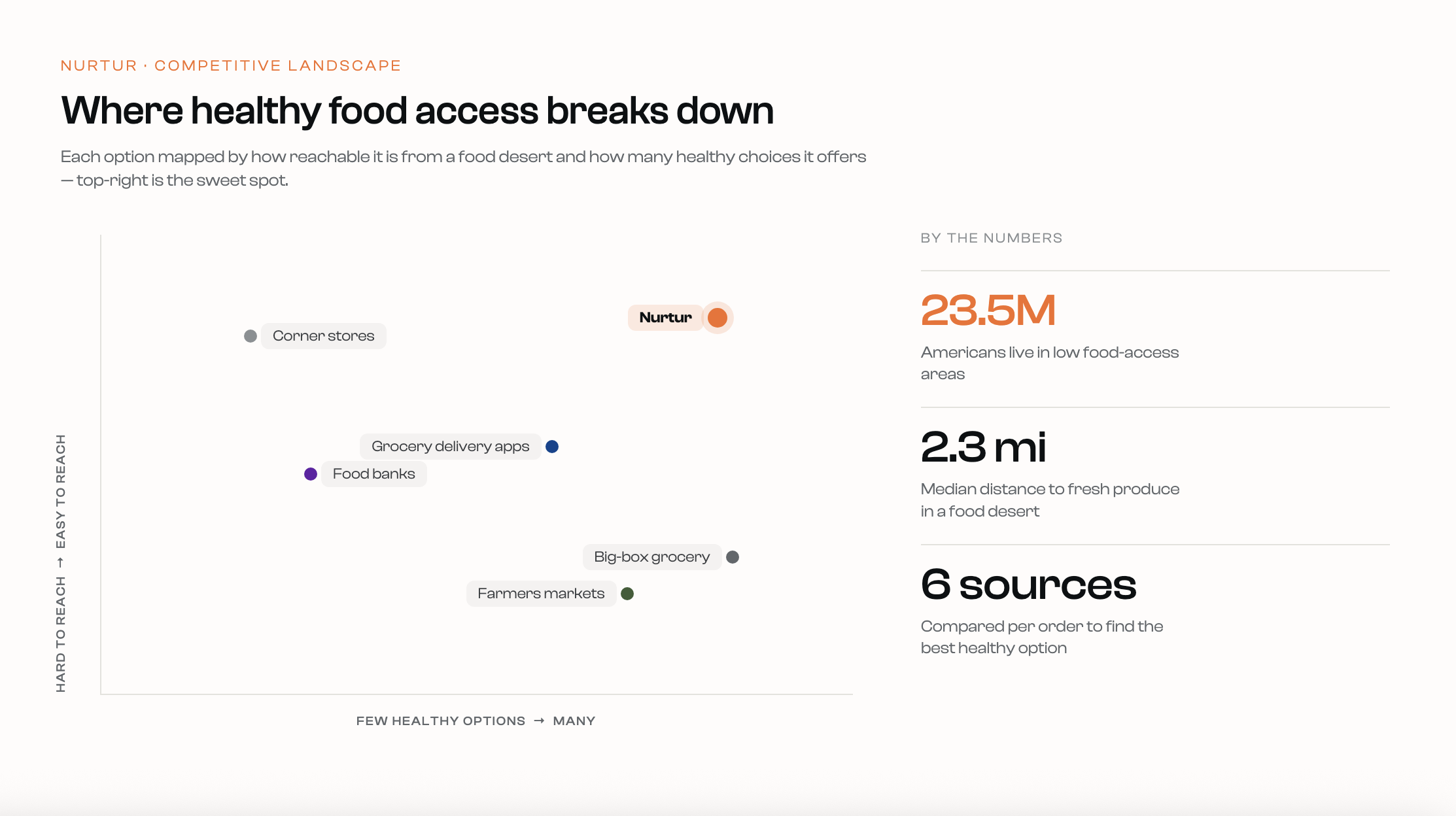
Although there were many apps that allow for food deliveries, there were few who were able to address and present a solution for both sides of the problem. While they delivered food, they did not address user’s health concerns nor did they place farmers front and center.
I prioritized a mobile first design to make the app available to more users. For the majority of users within my targeted demographics using mobile phones is practical, convenient and is on the rise. Therefore I prioritized a mobile first approach. However, I found that my initial navigation was too complex and could create confusion.
Throughout the hackathon, I started to narrow down my design solution to multimodal voice activated AI agent. An AI first approach eliminated the constant back and forth of different screens, but also allowed users to directly communicate their concerns without assuming what they might need. It also creates room for personalized experiences.

The agent still needed information from the users, and the onboarding process was the best place to start. Before entering the app, the agent asks users to answer a few questions. The information collected is then used to personalize search results based on the user’s location, budget, health goals, and dietary needs.

The search process was not the only feature of this app. Fridge scans and item scan features gave the AI a glimpse and more context into the user's habits and preferences, thus fine-tuning results.
The MVP has been deployed via Vercel. To access, click here.
For camera access and microphone access, explore the version in Google's AI studio.
Although this app was created for a hackathon, I tested this app with a couple of friends. They were not part of the target demographics, but the app was still able to provide accurate results and facilitate their grocery shopping experience. What I realized is that even though I was designing a solution for a very specific group of people, my solution could help anyone.