A renewed site to bring in more customers.
Shipped
2023

When Alterations by R.C. initially opened, there was a lot of buzz around the store. The traffic on the website was driving customers into the store. However, after a few weeks, the traffic died down.

The current website did not reflect the values or mission of the business. Additionally, the layout of the website made it difficult for customers to learn more about services and pricing offered by the business, therefore not instilling trust in customers and potentially deterring customers.
After the changes to the website, in-store attendance rose 15%, bounce rate dropped by half and questions regarding pricing in the store’s inbox dropped completely.
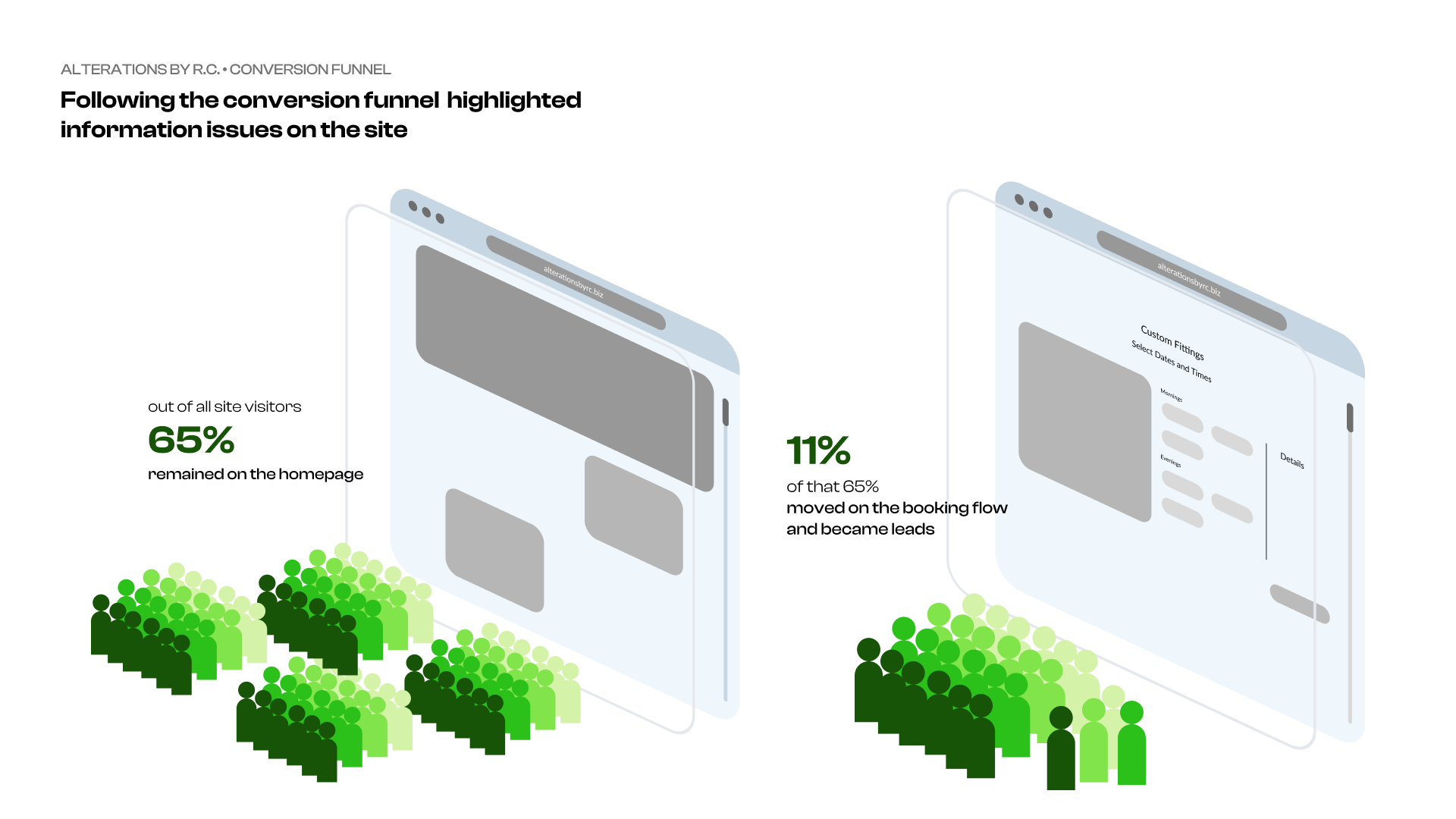
There were many pain points on the homepage, but the primary issue was the site’s navigation.
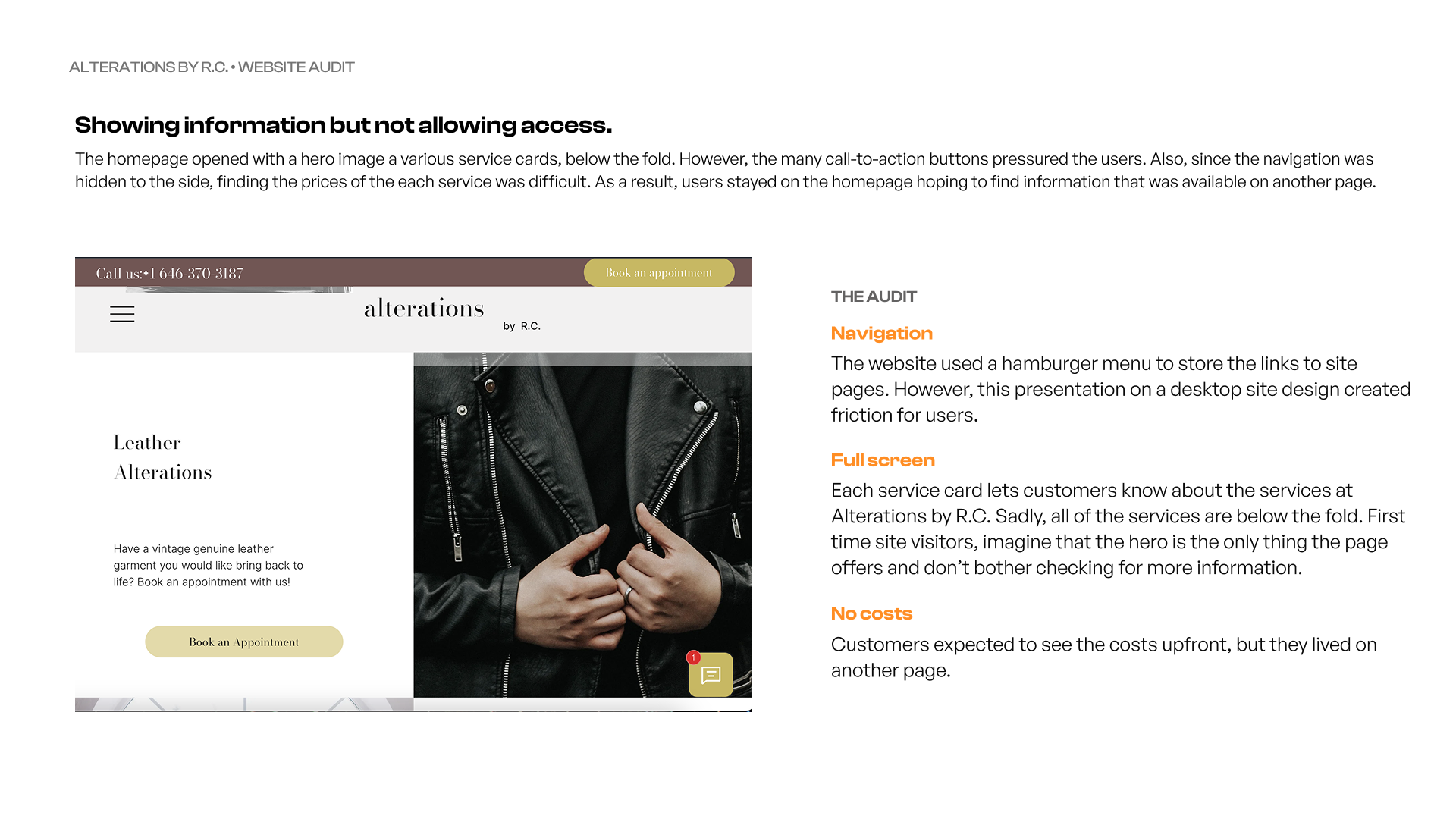
Hamburger menus are popular in mobile site designs, but many of the users searched for the business on desktop devices. Because the current site was not responsive to either breakpoints, customers were having issues navigating to other pages on the site, primarily the pricing page. The menu display issue created unnecessary user friction which ended up costing the business customers.
Bounce rates and messages notified me that many of the customers were not moving beyond the homepage because they were unable to find the other pages. Looking at the initial data, I assume that the site only had a discoverability issue, but a deeper look into the messages the small business received implied a findability issue as well.

Swapping the hamburger menu for a horizontal bar menu allowed the users to navigate freely from one page to the next, allowing them access to more relevant information and removing doubt from their journey.
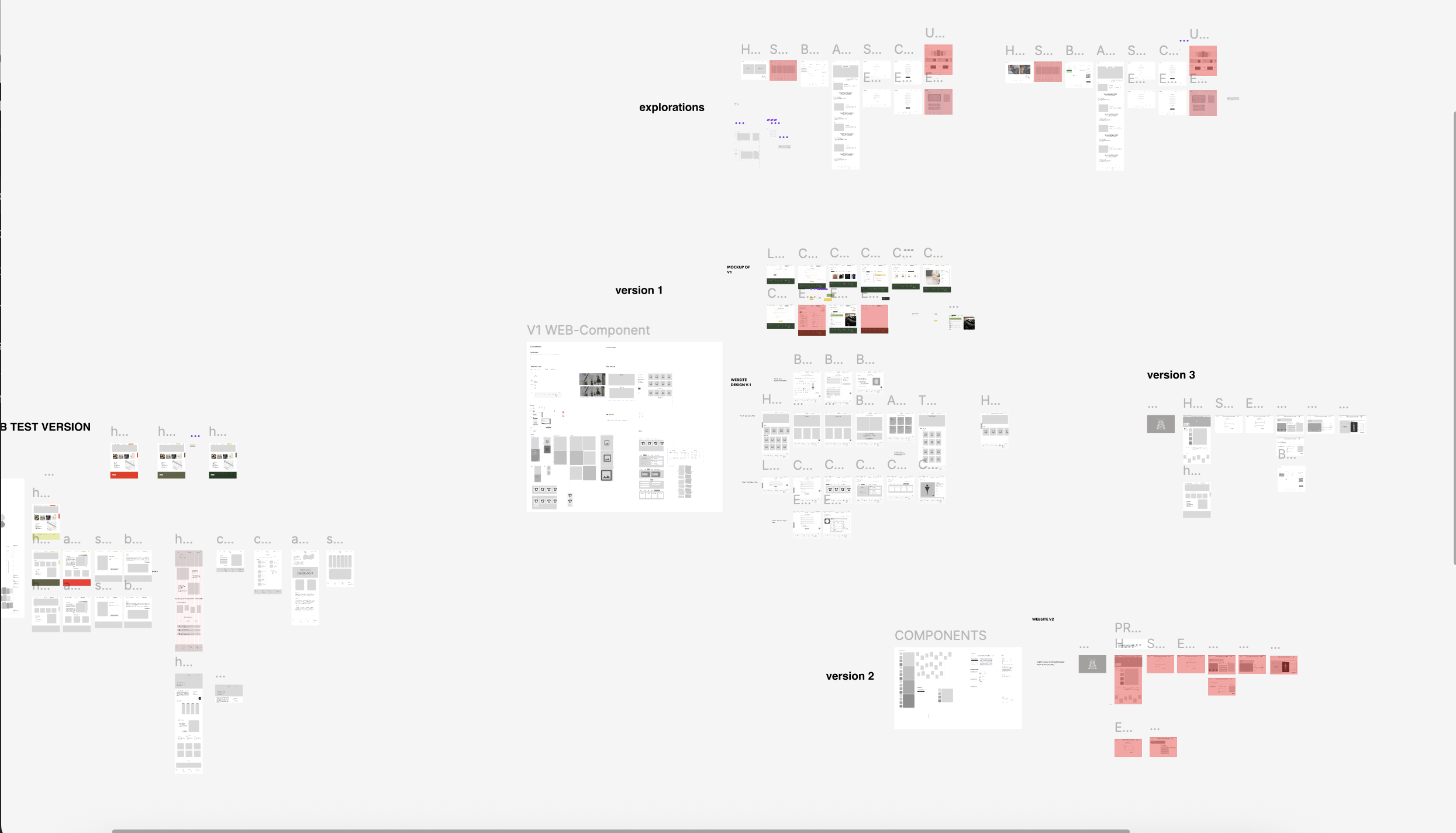
There were various different explorations for the website. I wanted to create a site that would create engagement.
Exploration 1:
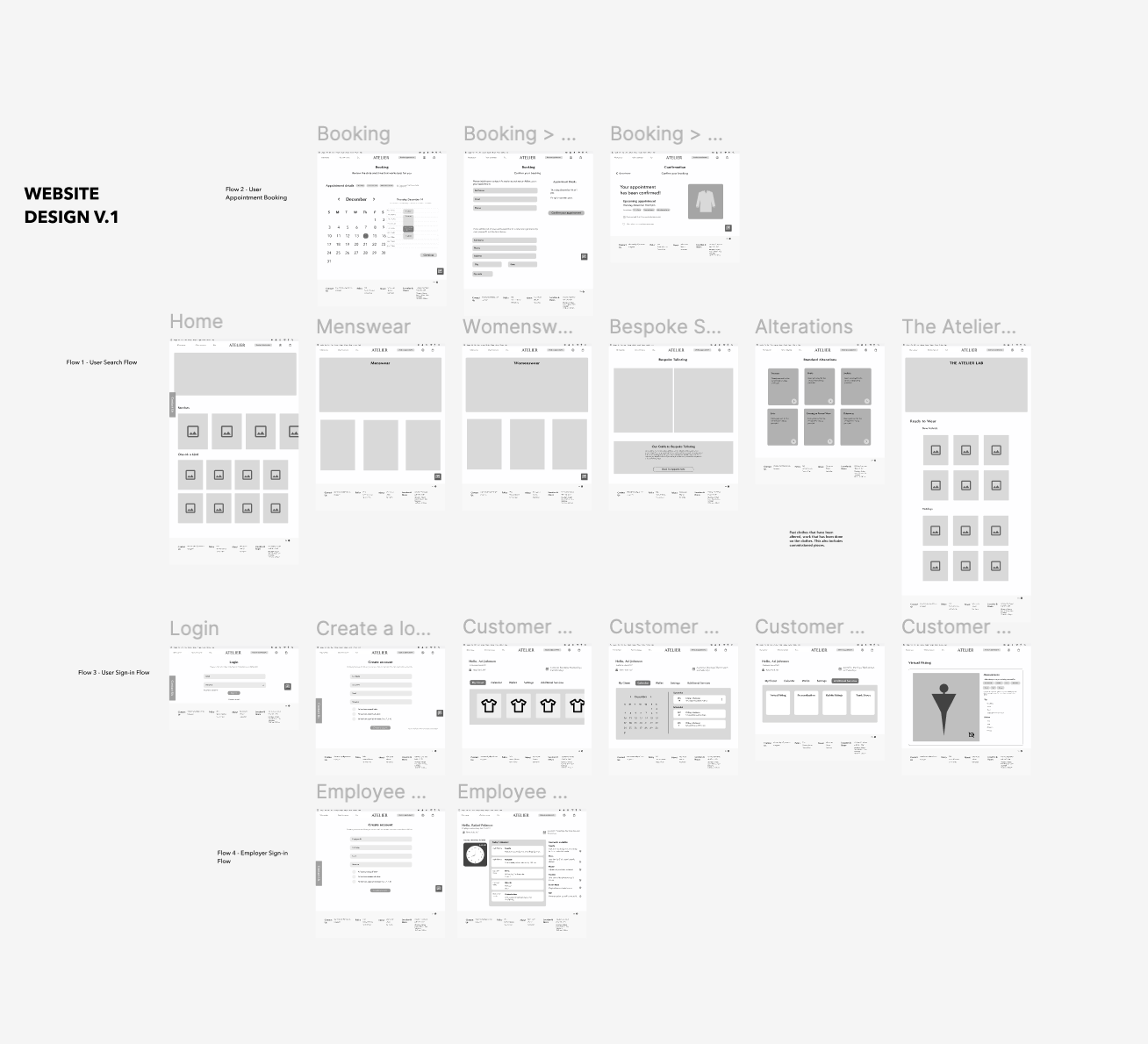
The first iteration of the design divided the services into menswear and womenswear. However this design added more pages, making it difficult for users to find booking and pricing pages. An idea that served to create the future self-service kiosk, was creating customer profiles. I wanted a way to speed up the alteration workflow for staff and allow customers to monitor their garment alterations,
Exploration 2:
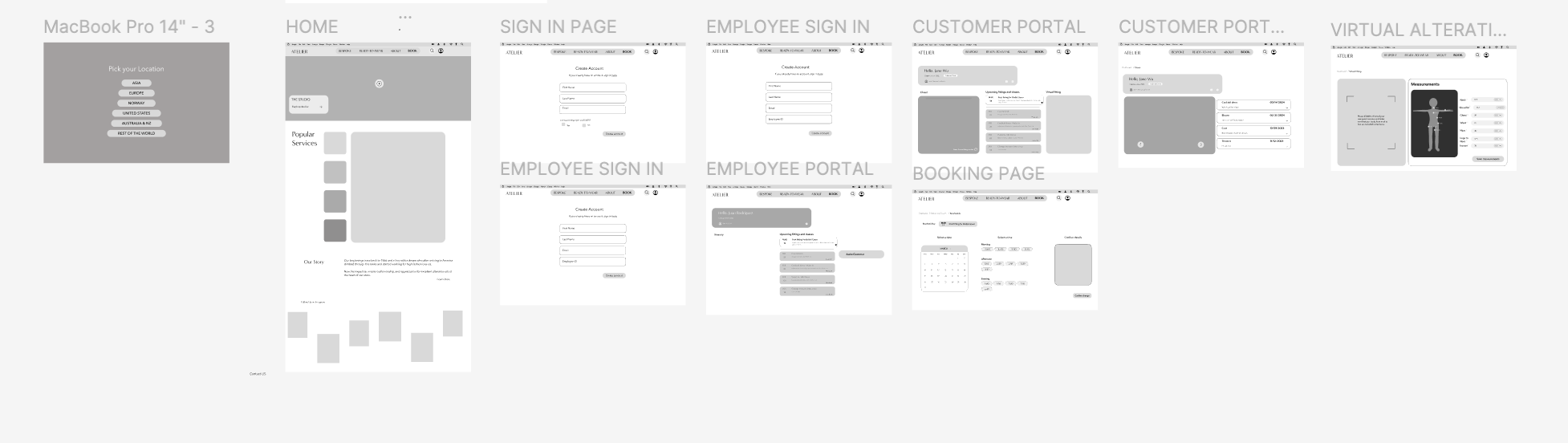
The second iteration heavily relied on video or image content, an attempt to create a more engaging site. However, this layout did not make pricing easily accessible for customers.

After running the A/B test for three weeks, more than 70% of site visitors moved past the homepage. Visibility for the booking flow increase in-store conversion by more than 30%.
An A/B test demonstrated two key changes: 1. changing the color palette and tone of voice created more booking appointments and 2. moving popular services to the homepage instilled a sense of transparency towards the customers, which made them feel comfortable booking appointments.
Key Insight : Customers were moved by an honest and friendly approach tone.

The final layout, colors and microcopy worked together to create visual identity that would later serve as the foundation for the business’s brand identity.
When I began the redesign for the Alterations by R.C., I had many instinctual design choices that I often second guessed but later on ended up choosing them. This project taught me to trust my design instincts instead of doubting, it saves time and helps ship a finished product faster.