Biology course concept for Duolingo
Concept
2026
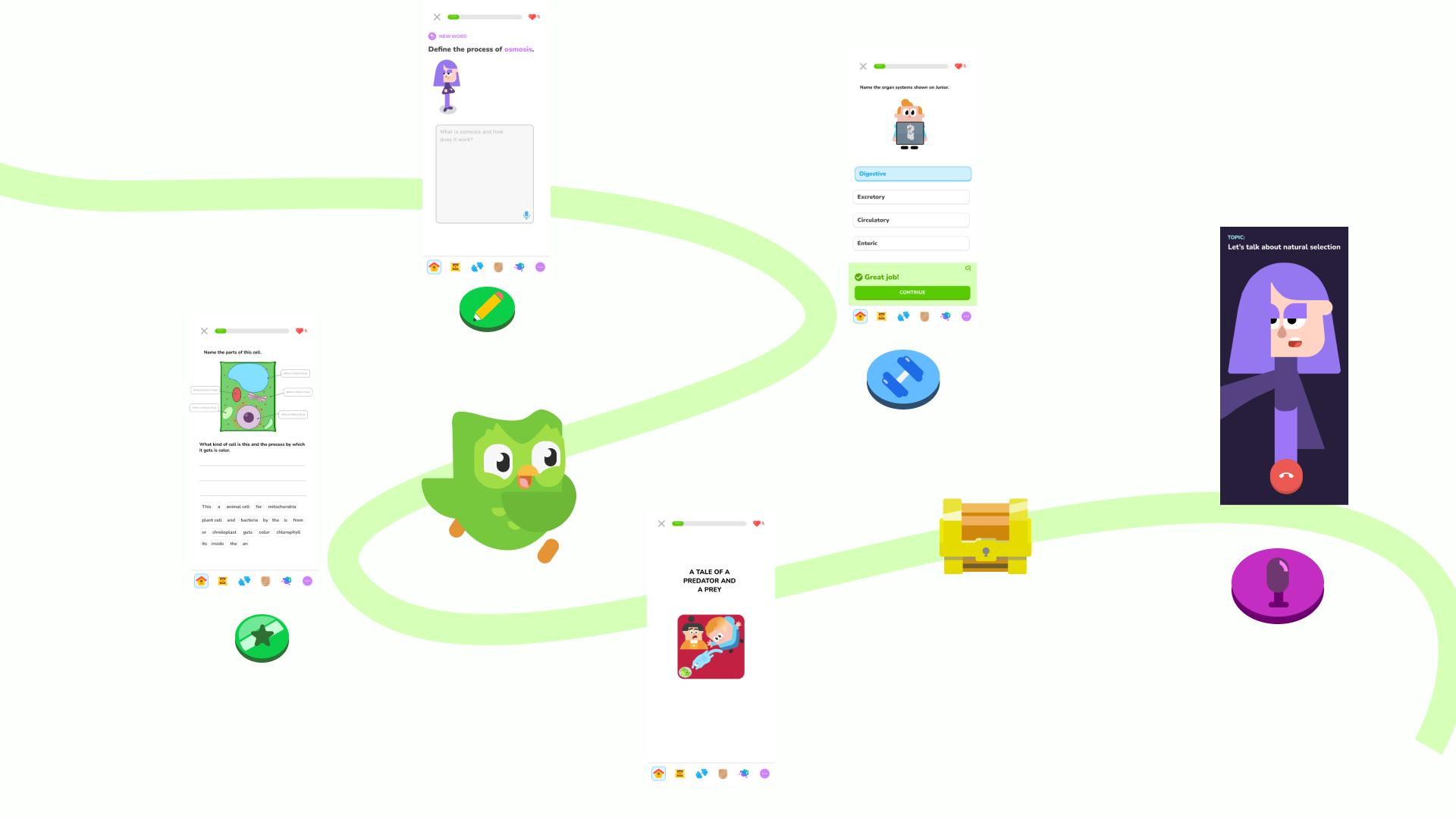
This speculative project imagines what a biology course could look like inside Duolingo's app.
The sciences have a branding issue. They’re just not popular.
Few students enjoy science classes. This is something I’ve witnessed firsthand while tutoring biology to high school students. Rote memorization and abstract concepts that don't feel connected to everyday life can make learning any science subject uninteresting. Sadly, low engagement and interest have caused low science scores on the Regents exam, with only 44% of students achieving proficiency.
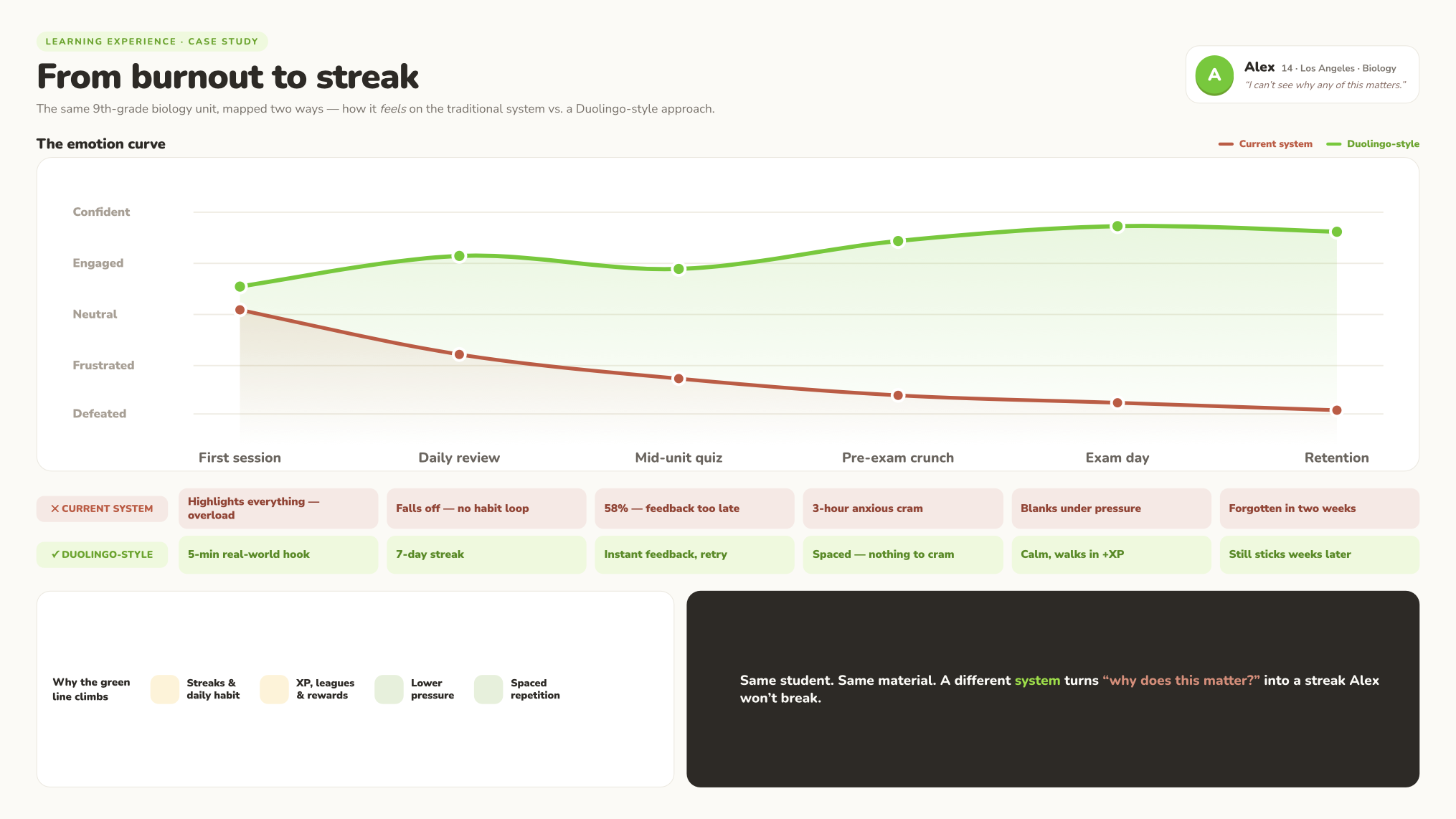
But what if Duolingo can make learning science fun and something worth caring about?
Duolingo has approximately 56 million daily active users worldwide. Through lovable characters and engaging content, Duolingo has successfully created a framework that has helped many learn a new language. People are invested not just because the Duo owl sends you messages that keep you up at night, but because it has added value to learning. The learning path, the characters, the gamification — they exist to turn something unfamiliar into something personal.
The sciences deserve the same treatment. This speculative project applies an already successful framework to biology.
I didn’t set out to invent something new. I set out to borrow and extend something that works, the Duolingo app, to something that wasn’t, science education.
Duolingo has already successfully expanded to cover Math, Chess, and Music. Why not science? Each subject creates a unique experience and ensures that learning is not static. Whether it's by playing along to popular pop songs or having chess matches with Oscar, each engagement encourages users to apply the skills they have learned.
The same can be done for biology. One of the challenges students face is applying their knowledge to graphs and models. But Duolingo can help.
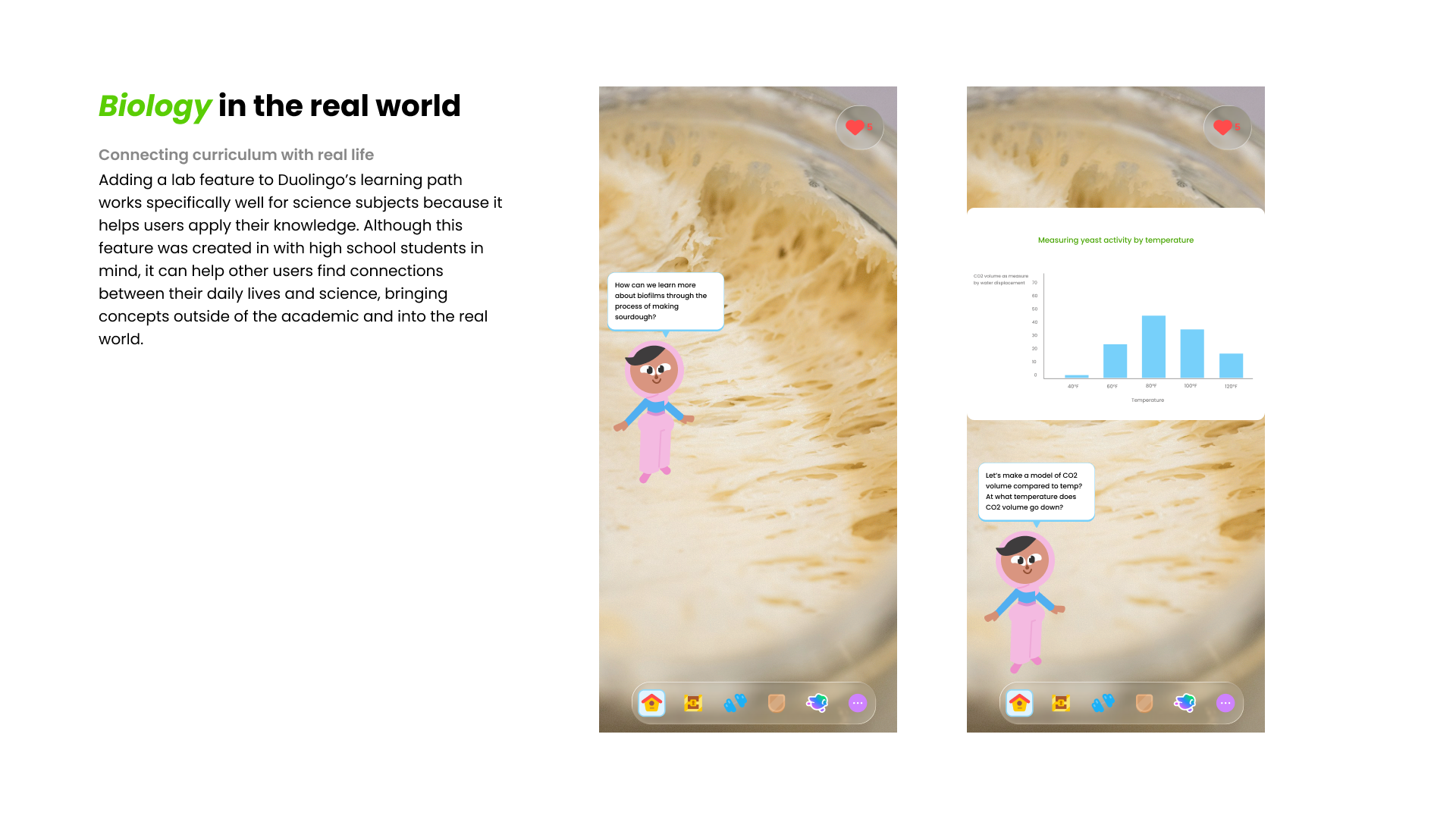
Leveraging AR into Duolingo’s app takes hands-on learning to another level. While the AR concept is new, it is built on one of Duolingo’s fundamental pillars: making learning fun.
To make this idea more enjoyable, I relied on Duolingo’s design system and used its characters, its learning path structure, and its gamification engine to do something it hasn't done yet.
HOW DOES IT WORK?
Part of designing this course was looking at the current curriculum, specifically New York State’s curriculum, and coming up with ways to inject delight into the experience. One setback of the current curriculum was relating material and creating connections between each topic.
With Life, Explained, I took Duolingo’s classic learning path structure to create lessons that cascade into each other, connections from one sub-topic to another. This new structure allows students to see the relevance between each concept and follow a through line that helps them make sense of biology as a whole. connections between one concept and another.
For example, the first learning section may be about cell structure. In this topic, the student learns about cell structure, osmosis, organelles, and the function of each organelle. The following lesson might focus on organs and organ systems, offering first a micro view to then expand to macro. This progression traces out the way each concept relates to others, hopefully helping students see the connections between learned concepts and real life.
Lily AI:
Phone calls with Lily now function as a way for students to cement their learning. Lily allows students to explain what they learned in a specific lesson, thus solidifying a student’s grasp about that concept.
Duo Stories:
Duo Stories allow students to explore the topic beyond core concepts, giving them a glimpse to how that concept can be applied in everyday life
DuoRadio:
Duo Radio takes a wider scope by helping students understand material through new scientific discoveries. For example, listening to Junior’s podcast on genetic modification.
Real life link:
This would be a new feature. The AR link allows students to see and learn about things in their everyday life.
Although this is a concept project, if it shipped, success would look like students returning to biology the same way they return to Spanish: habitually, because something that once felt irrelevant now feels personal. Daily active users and lesson completion rates within science units would be the primary signals.
Working on Life, Explained pushed me to think at two levels simultaneously: big picture — what science education could look like inside Duolingo — and detail level — designing within an existing system for a specific audience while still making it feel personal.
That tension between constraint and creativity is where the most interesting design problems live. And it's exactly the kind of problem I'd want to keep solving.