Tailored work order management system
Shipped
2025- 2026
A small garment business was growing. As a result, more orders were coming in. However, it's current system could not keep up the business’s demand of clients — creating unnecessary friction, bottlenecks and delays. Backed-up, delayed, or misplaced orders began to affect the store’s reputation and it's newfound momentum. Here's how I rebuilt that system, and what happened when it got tested by conditions we didn't plan for.
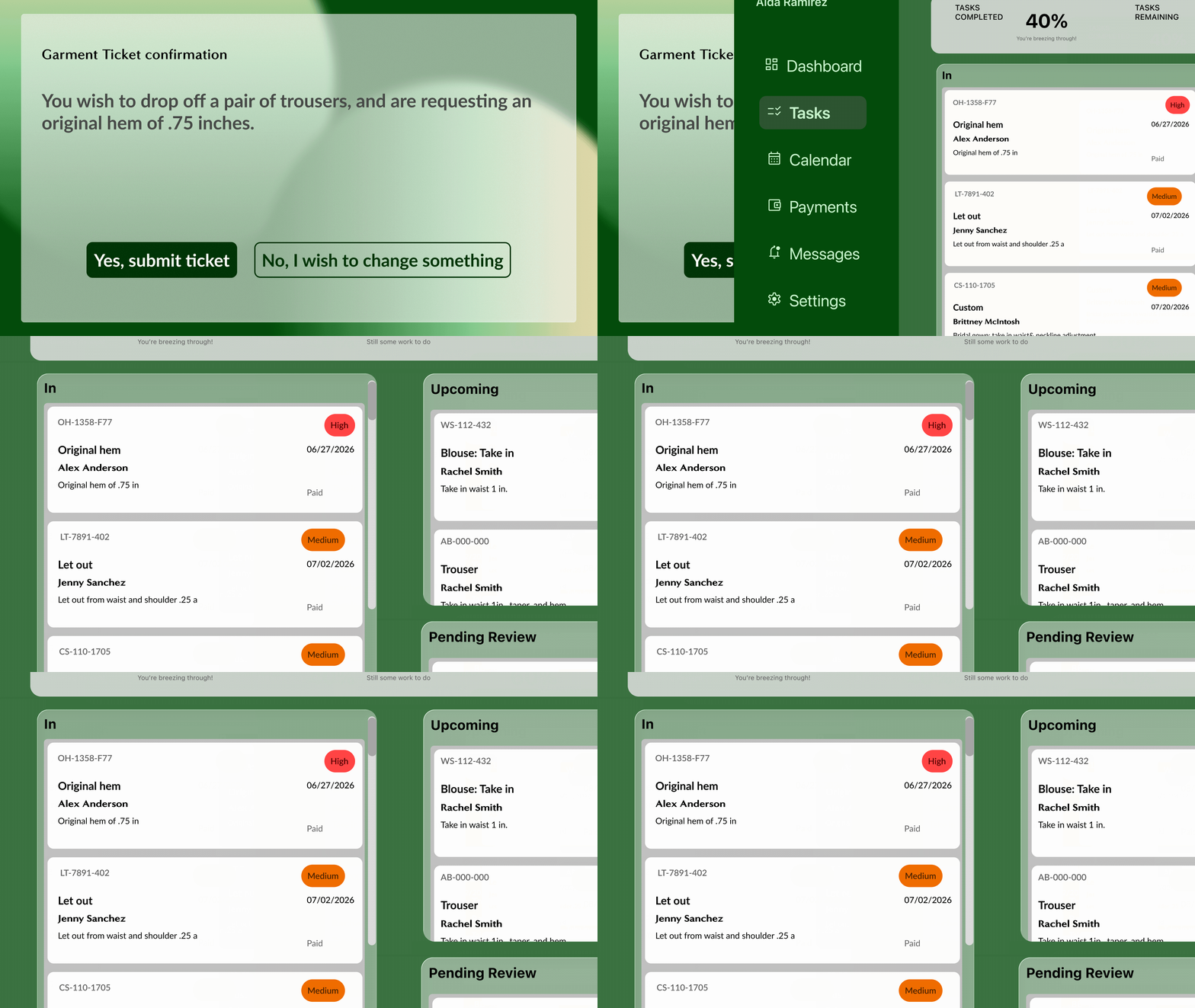
Alteration’s new system is a unified platform that handles both daily operations and business management. The process begins with the customer-facing kiosk. A customer drops off their garment. Then, their order enters the system and gets organized by priority, ensuring timely completion of orders. The work order moves through the a management system and gets ticked off when work on the garment is finished.
On the business management side, completed orders translate into sales, therefore allowing the owner to see his weekly sales.
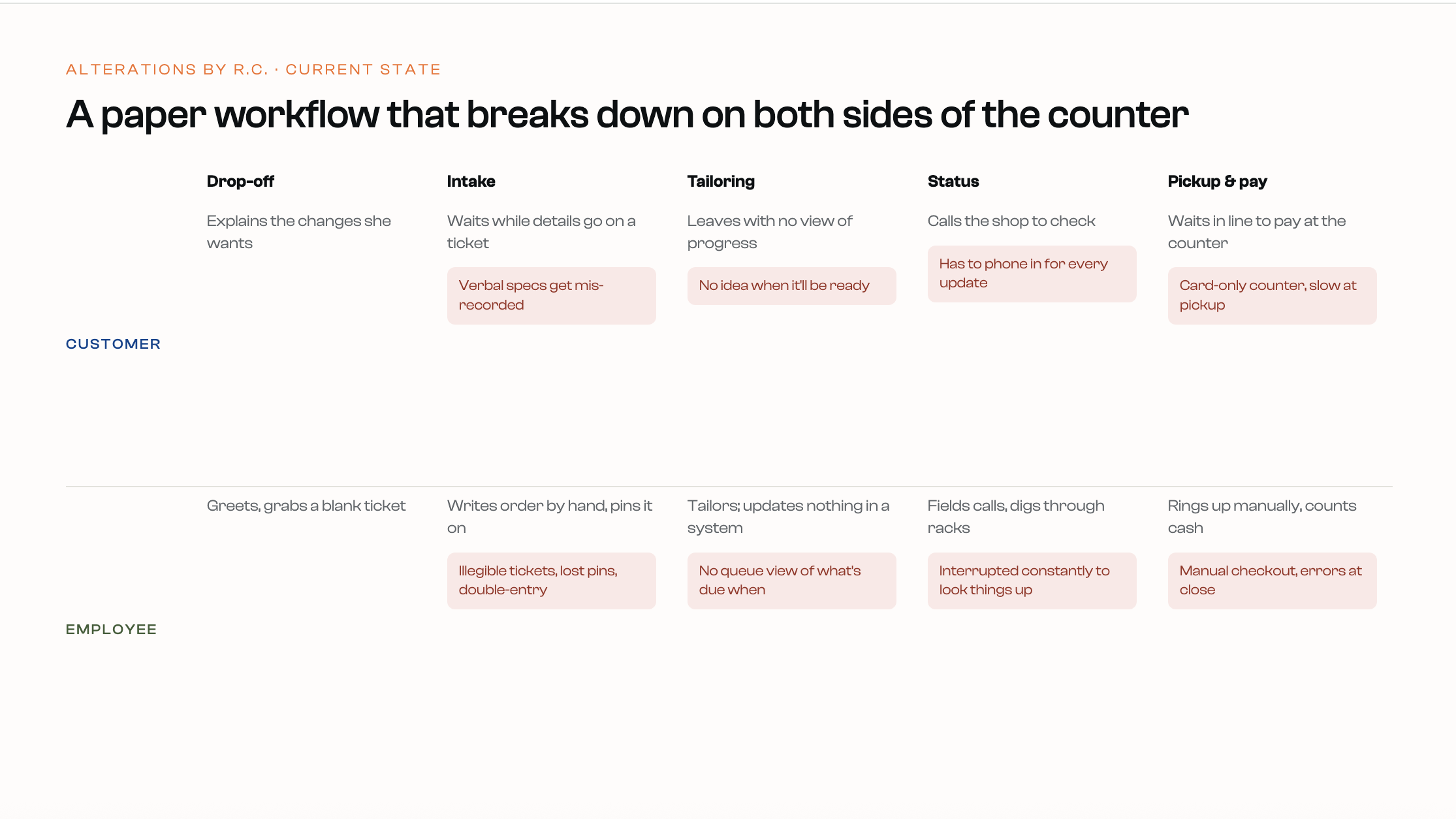
Business growth was outpacing the operation system at Alterations by R.C. As a result, orders were backed up, and tailors were being stretched thin.
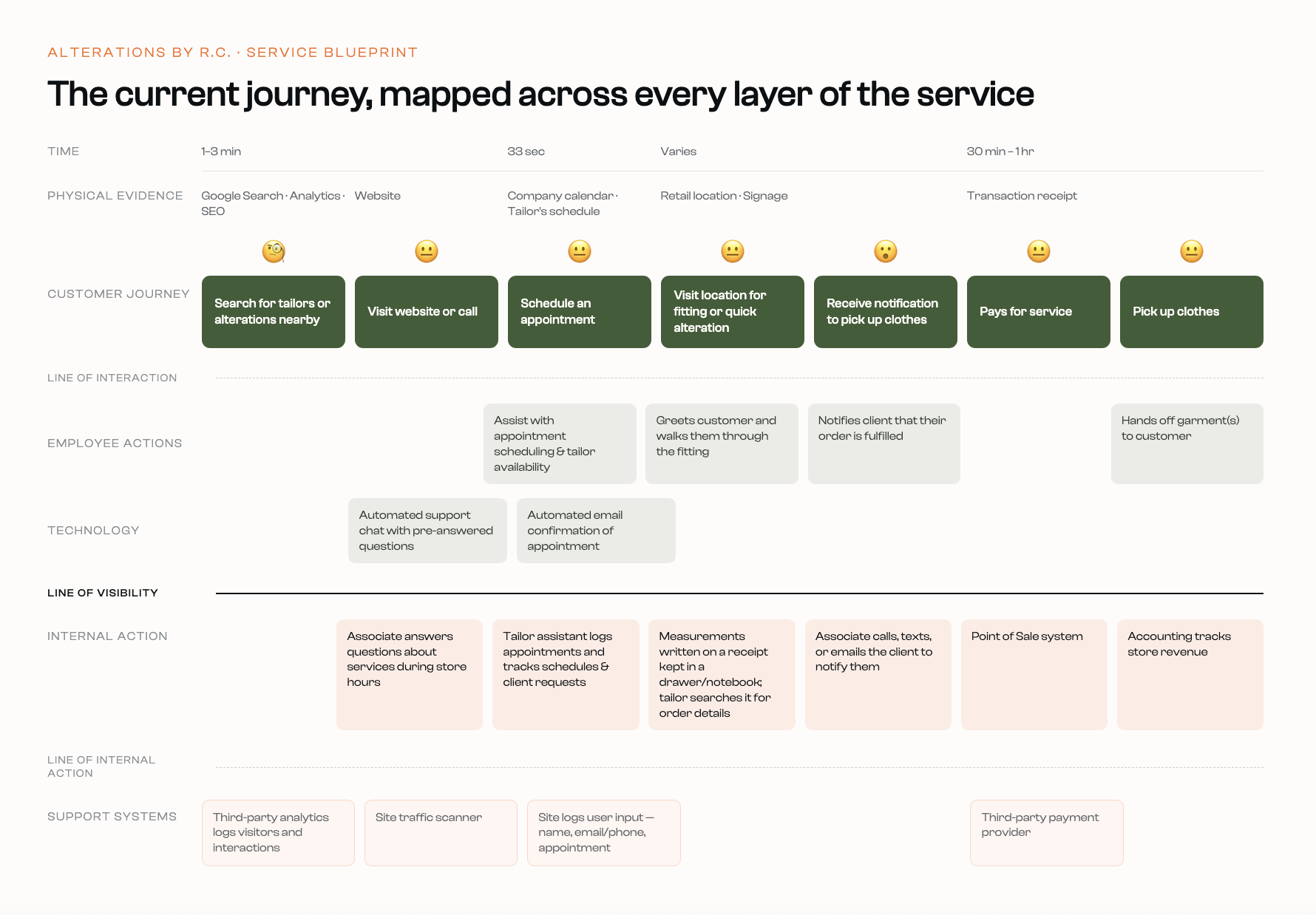
I spent a few weeks assisting the staff as a sales associate. As a temporary sales associate, during busy hours, it often felt like we were short staffed. While I assisted one customer and a tailor did a fitting, we often had up to five customers waiting to fulfill simple requests.
Pain Points:
Key Insight: Daily operations heavily relied on data provided by the customer; however, the current system did not utilize this information well.
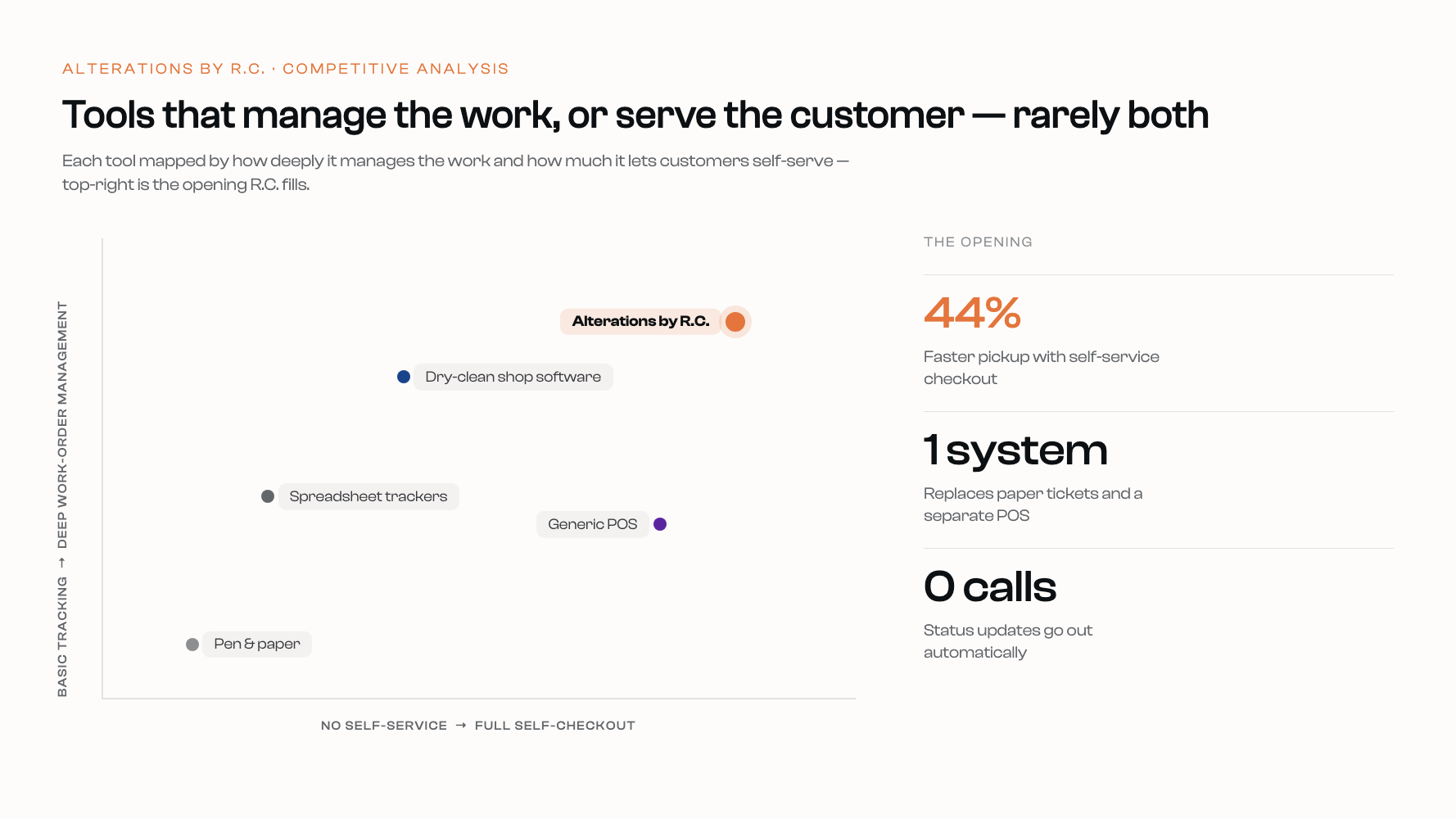
Although there are business management and work management software available for businesses, Alterations by R.C. needed a specific work management system that accounted for the details and data that make work for a tailor possible.
The current system was not built for scale. It did not handle growing clientele; therefore, I needed a system that would ease the workload of tailors but still maintain the personal experience customers received when they came to the store. I started by talking to the business owners and staff to understand how to build this new system. In this brainstorming process, I kept in mind two considerations: the original mental model of working at an alterations store and customer experience.
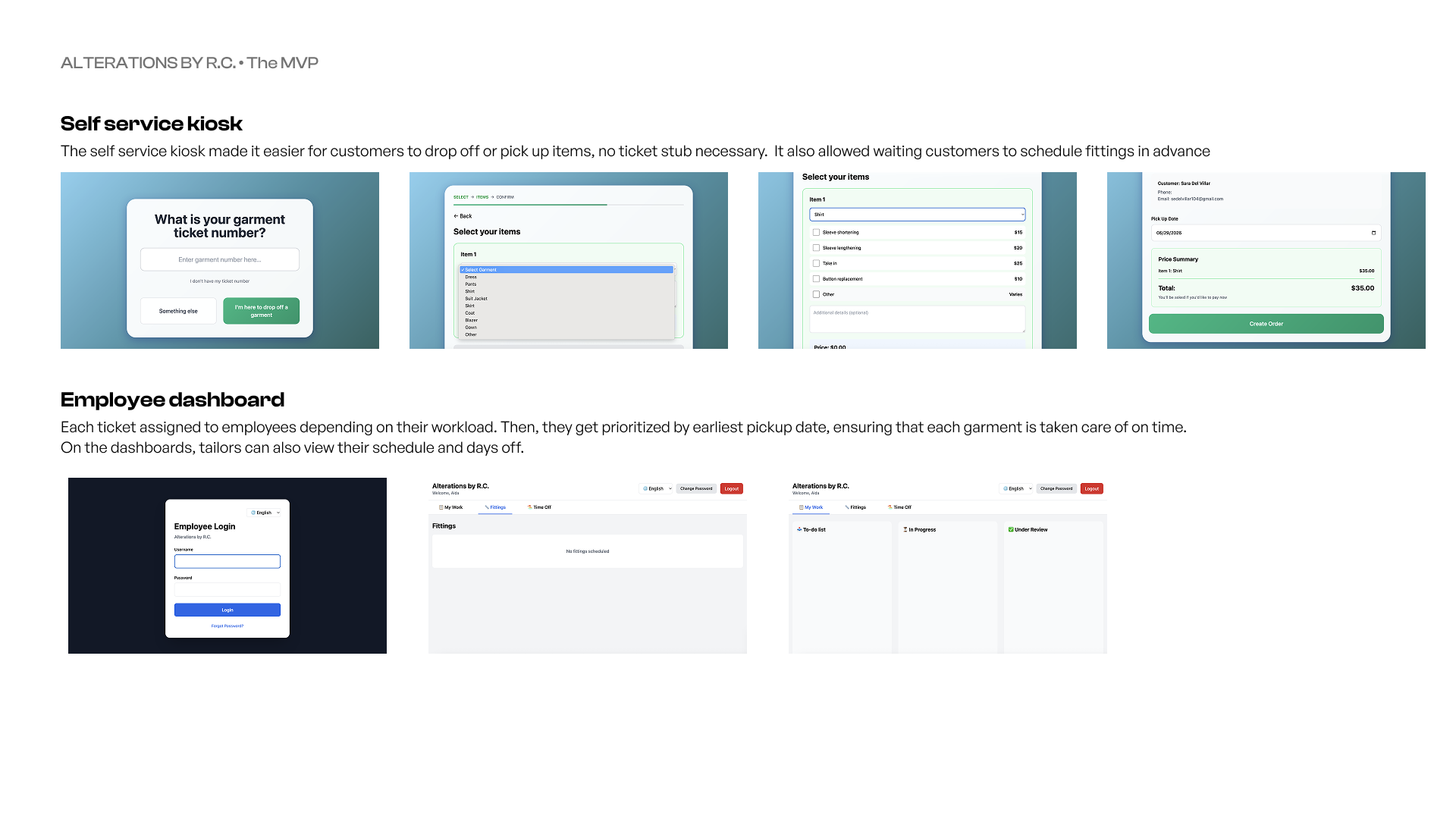
Part of the tailoring process is getting fittings, but not every customer who enters the store needs a fitting. Some need quick fixes, such as replacing a button or adding a zipper. In those cases, the kiosk provides a quick drop-off point, eliminating customer wait times and work for tailors.
The kiosk now allowed for customer pick-ups, another task that tailors needed to attend to. Creating the pick-up flow was tricky. How can I create something that keeps a history of picked-up items for the business owner, but clears out every week?
This was more of a developer note, but throughout the design process and since I (with the help of Claude) was developing the MVP, I had to keep in mind the types of data structures I was going to use to keep track of orders.
The business owners needed a history of fulfilled tickets, but on the customer-facing side, the kiosk needed clean “lockers”, an array from 1 through however many high-priority tickets were being fulfilled that week, to sort finished garments.
This functionality of input data via new tickets and cleared data via picked-up garments helped create the backend.
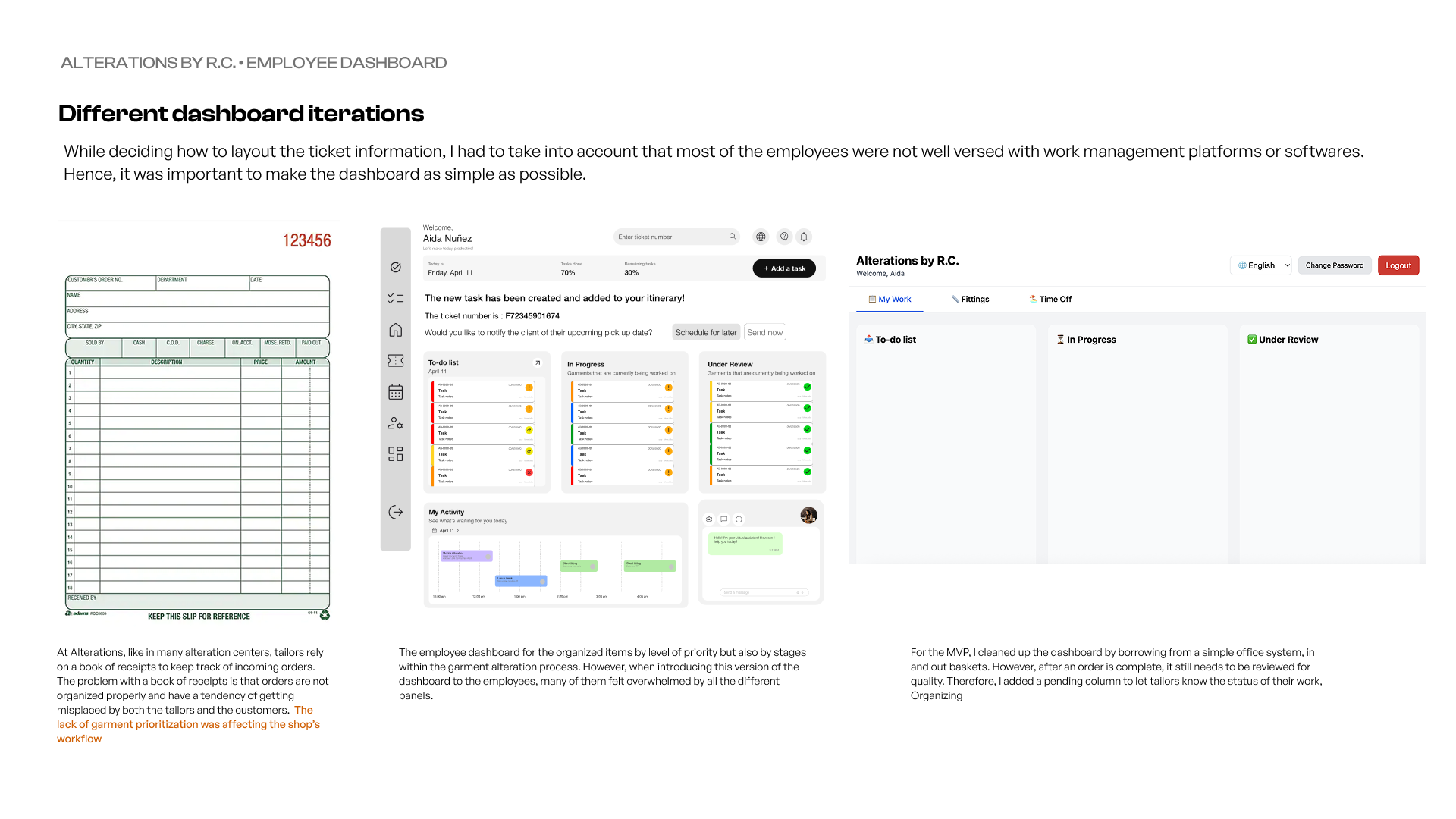
Employees needed to reduce the number of things to keep track of.
To reduce employee’s cognitive load, I designed a dashboard that kept track of all the tickets and prioritized them according to pick up dates. On the customer facing side, customers could easily pick up and drop off items, without interrupting the employee’s workflow.

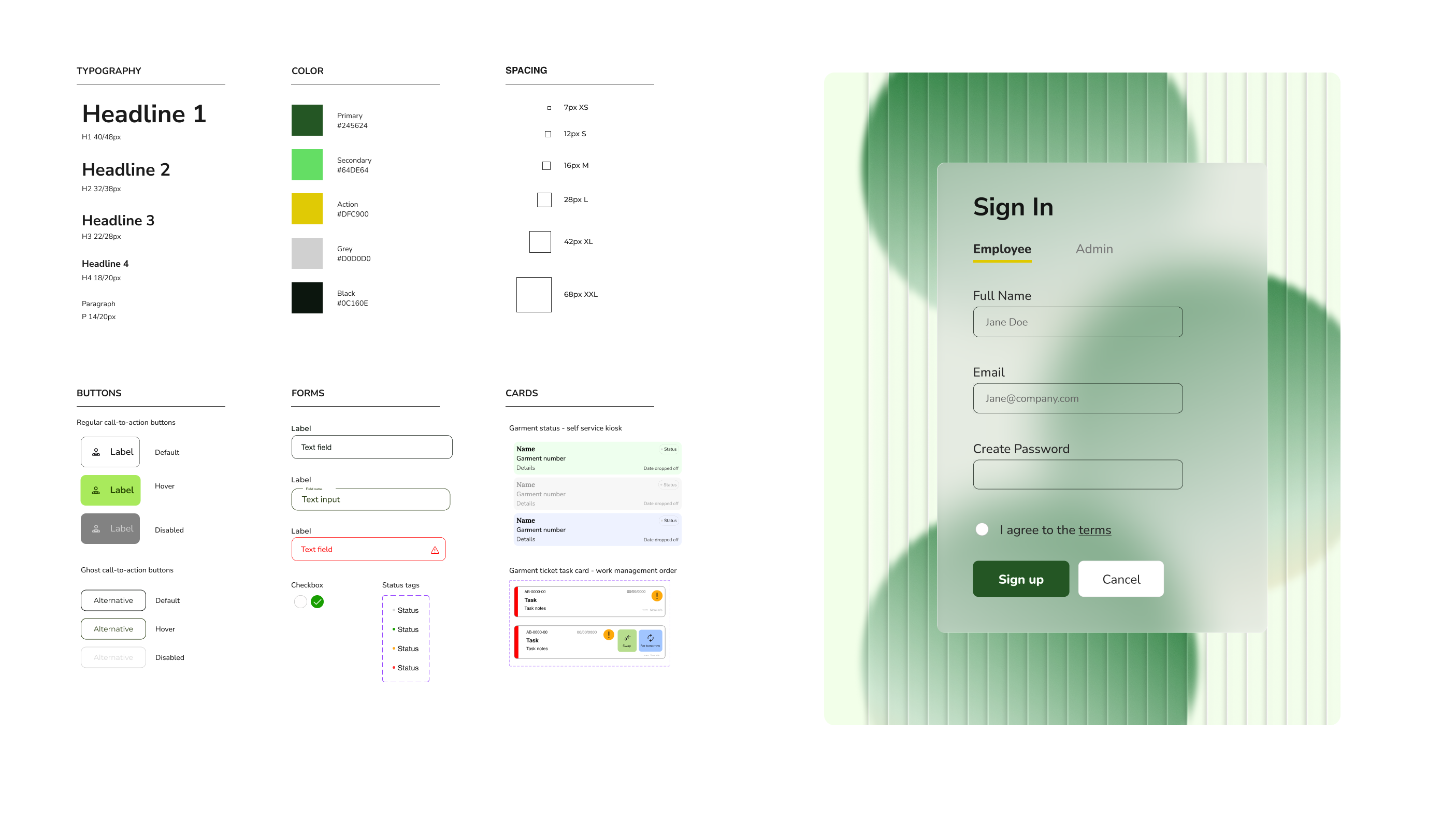
Although the experiences for the frontend and backend were different, they needed to feel part of the same business. I wanted to achieve this through a visual guideline. It wasn’t just for aesthetics, but rather to inform future design.
A few days before testing the MVP design, I learned that the shop no longer had WiFi connection. The new paper system was created, not as an afterthought, but as conscious fallback system for when things don't work.
With these new constraints, I had to pivot and test the system in a different way. I chose to test out an analog version of my design to see if the new organizational architecture would assist the employees and create a mental model for when the new digitized system would be implemented.
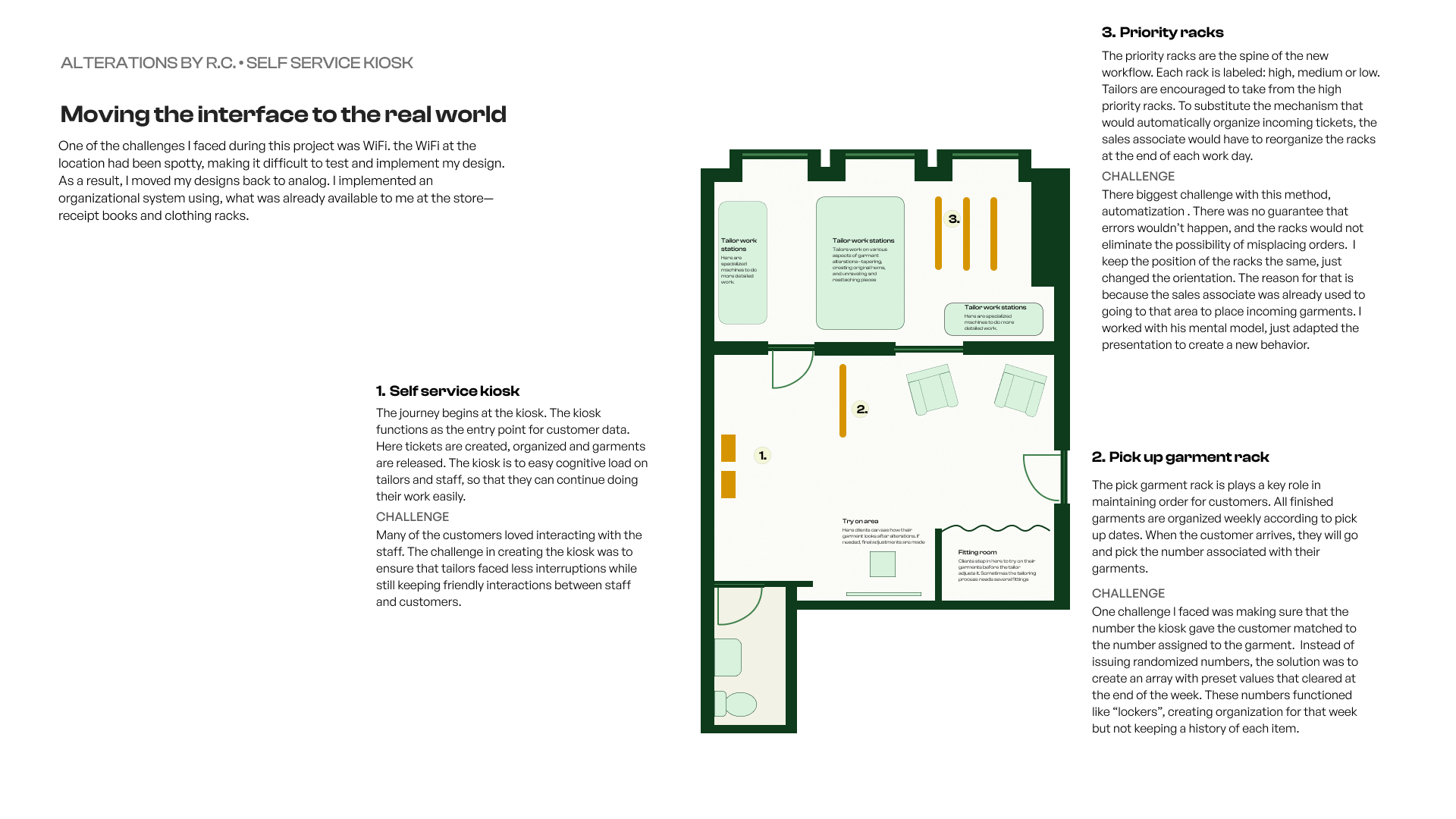
The re-design consisted of a manual for daily operations, a new receipts booklet that allowed the sales associate to detail the type of alteration the garment needed, color code stickers, a big binder and visual identity guideline.
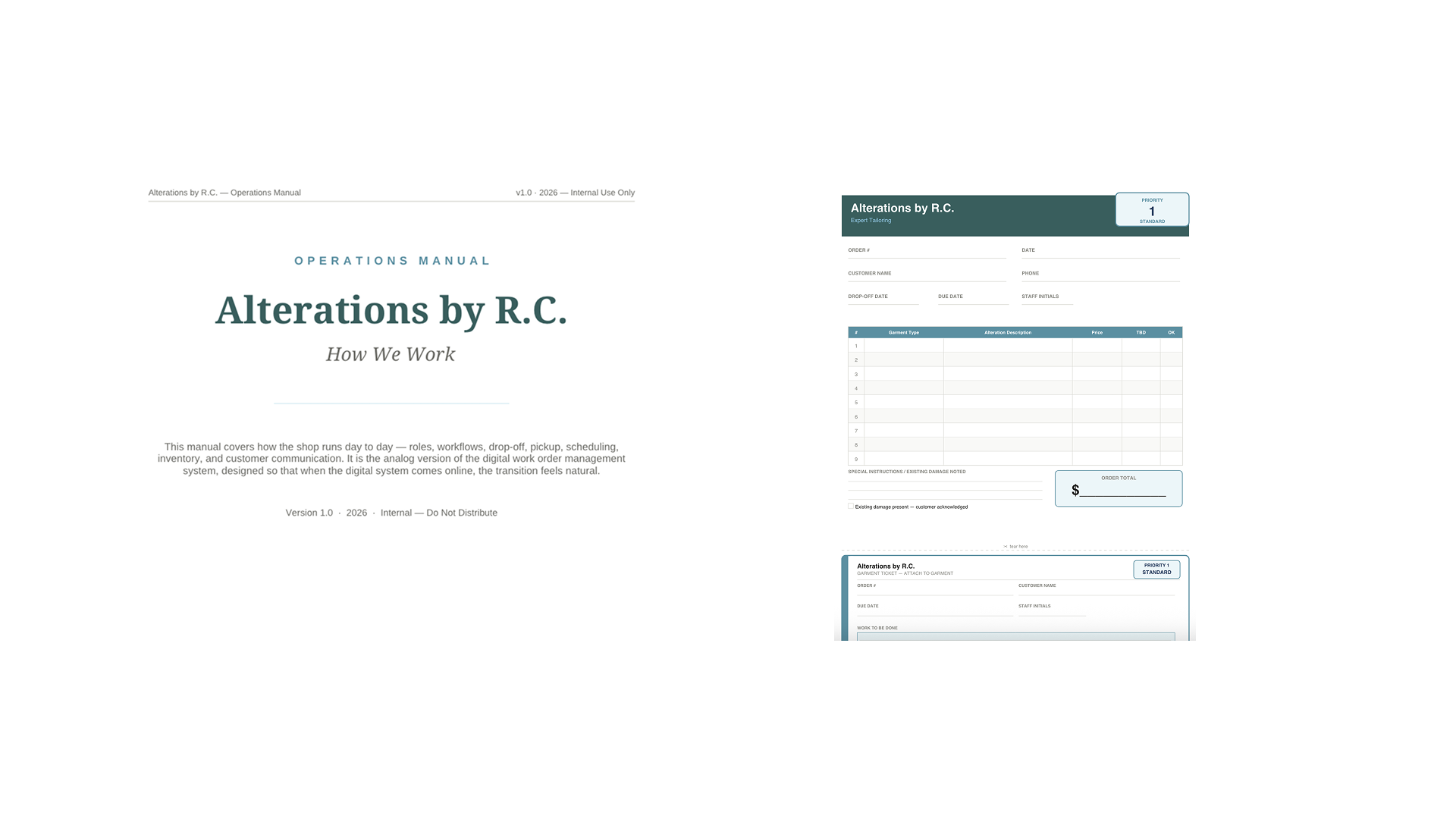
The analog MVP has worked and held on so far. Once the WiFi issues are resolved, the owners are eager to implement the digital system I created.
"This new way of organizing clothes has helped up work faster. The designated areas too. Everything is organized and easy to find." - Aida (Head Seamstress)
As a designer, I've always believed that user interfaces exist on digital surfaces and that designing for digital experiences is sole job of a UX or product designer. However, when I had to adapt my design and revert back to an analog format, I realized that it was still design. I was still creating an experience informed by user needs and feedback that was aimed at solving a specific problem.